Tuesday, 27 January 2015
Musings on 'peace advocacy' in popular culture
In lieu of a proper update;
I was in a bookshop during lunch reading some anti-war books warning about the bifecta of "modern culture" and the "military cultural complex" and how they interact to drive us toward destruction.
To be honest, I don't agree with most of their conclusions. For example, a lot of these writers - whose names I should have taken down - make the assumption that an interest in warfare (and killing, apparently) is something to be stamped out. In my opinion, for a society to have people interested in its defence is no bad thing, no worse than a lot of other activities out there.
However, I do think it's important to have these pundits around. In the Western world, military showdowns as a first choice to resolve inter-state disputes have lost much their shine after the two World Wars, and I personally think that's good. Such advocates often mean well, and their arguments are certainly needed in modern society.

Friday, 19 December 2014
Camp justice - we need more than legal statements
This case could potentially have been a very explosive one. Like it or not, the G-Wagen incident
involved spurious orders and unit culture and could have become a catchall for something many Singaporean conscripts would have experienced. The fact that a five-day safety timeout was ordered back then in 2012 might also mean that an astute staff team realized that deep issues had made themselves felt despite the SAF's avowed strong safety culture.
involved spurious orders and unit culture and could have become a catchall for something many Singaporean conscripts would have experienced. The fact that a five-day safety timeout was ordered back then in 2012 might also mean that an astute staff team realized that deep issues had made themselves felt despite the SAF's avowed strong safety culture.
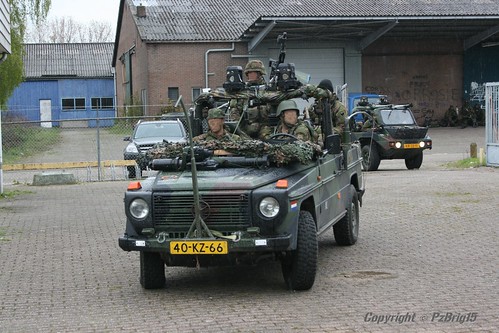 |
| MB-290 type jeep much like that involved |
(Admirably, the conducting officer has been charged as well.)
A "weak safety culture", as uncovered by the committee of inquiry, is one thing, but another deeper issue exists.
The issue in this case in my opinion would be one of the military's culture. It is admirable and right to say that soldiers ought not to follow illegal orders. However, where's the protection for troops in this situation? What institutions guarantees soldiers' safety and welfare (not rights, not in Singapore) if they make a fuss? I only recall a cursory hour-long treatment of military law delivered one groggy evening in BMT, although I hope this has changed.
For example, if a junior is unsure of his orders, he can verify them with his superior's superior, and can but need not obey in certain situations and must not in others. If the order is illegitimate and he carries it out, he has to take responsibility as well.
It's not just a set of broadly stated 'mission statements', too. I am unclear as to how well it is enforced in day-to-day operations, but there is a genuine commitment to this. For example, the Federal Republic and Germany today has no special military courts - all offences are tried in civilian courts. Such a stated goal can very easily break down, the military being a world apart, so constant care from the civilian sector and of course the military's own leadership is always needed. It may reduce flexibility in some instances, but this is but an aside point.
Stuff like this certainly won't solve being trapped in ire, say, if you do something unpopular but right, or choose not to compromise, but this is one's personal decision and you ought to defend it. It can however provide encouragement to question itself in a constructive manner, and empower conscripts rather than appealing to "man mode". On a more philosophical level, it's asking "why" rather than "how". Deeper change is needed than a judge's announcement and MINDEF press releases, which are simply treated with derision by HardwareZone and the like.
In the end, a refusal to confront such issues simply leads more to practices like displaying your license on the dash in lieu of real organizational shifts.
Frankly, this situation upsets your author because this was 3 3SG instructors in the back of a jeep tearing around the training grounds, one very familiar to me as a former spec. The last line of the article was even worse, and the reporter was clever putting the line about the "orders" in. I can only imagine what was really said.
Wednesday, 3 December 2014
What's the market for military history and education?
I was at a speech recently given by a professor I respect greatly about the UK's commemoration of the First World War. He brought up some good points, chief among which is that the overemphasis on the old and staid methods of "remembrance for the dead" rather than trying new approaches.
One thing that was discussed was a gap between academic discussion and public knowledge. The subject at hand was WW1, so what was brought up was the Alan Clarke view of the British army- "lions led by dinosaurs". That view has pretty much been long exploded with the opening of archives in the 1960s onward. This revealed, among other things, a more nuanced story. Commanders genuinely put in their due diligence in finding innovative military methods, but were limited by factors such as poor communications and plain bad luck. Unfortunately, the Blackadder view of silly subalterns and indifferent generals has proved surprisingly hardy.
This brings me to the next point that I found interesting - that enthusiasts of military history consistently underestimate the level of interest that the public has in the endeavour. Not for nothing did the poppy display at the Tower of London attracted an amazing amount of visitors, despite it being another tried and tested meaning of canonizing the troops.
It's true that warfare is a uniquely emotional issue (and thus also tends to attract its fair share of oddballs), and will have a place in the human imagination higher than most. Perhaps a TV documentary countering the Blackadder story, if successfully funded and promoted, could easily lay this misconception to rest, rather than the million "TANK BATTLE!" series.
Of course, this also depends on the society you are living in and its values/zeitgeist - the view from Stockholm will not be the same as that of St. Petersburg or Singapore.
Nonetheless, the real implication to me is: if practitioners of military history produce good analysis and offerings, their audience may be larger than they expect.
Frankly, it is the profession's fault that there has been an overemphasis on the easily commoditized, glamorous aspects of warfare. See the endless equipment discussions of the merits of jet fighters or rifles, or the hundreds of expensive Osprey tomes, or the hoary old soldier's memoir - real Boys' Own stuff.

The market for this is well-established, and there's nothing wrong with that: Osprey books are great. However, enthusiasts ought not to sell themselves short by focusing on niche elements of war, and instead endeavour to start a conversation on other aspects.
More on this to come.
One thing that was discussed was a gap between academic discussion and public knowledge. The subject at hand was WW1, so what was brought up was the Alan Clarke view of the British army- "lions led by dinosaurs". That view has pretty much been long exploded with the opening of archives in the 1960s onward. This revealed, among other things, a more nuanced story. Commanders genuinely put in their due diligence in finding innovative military methods, but were limited by factors such as poor communications and plain bad luck. Unfortunately, the Blackadder view of silly subalterns and indifferent generals has proved surprisingly hardy.
This brings me to the next point that I found interesting - that enthusiasts of military history consistently underestimate the level of interest that the public has in the endeavour. Not for nothing did the poppy display at the Tower of London attracted an amazing amount of visitors, despite it being another tried and tested meaning of canonizing the troops.
It's true that warfare is a uniquely emotional issue (and thus also tends to attract its fair share of oddballs), and will have a place in the human imagination higher than most. Perhaps a TV documentary countering the Blackadder story, if successfully funded and promoted, could easily lay this misconception to rest, rather than the million "TANK BATTLE!" series.
Of course, this also depends on the society you are living in and its values/zeitgeist - the view from Stockholm will not be the same as that of St. Petersburg or Singapore.
Nonetheless, the real implication to me is: if practitioners of military history produce good analysis and offerings, their audience may be larger than they expect.
Frankly, it is the profession's fault that there has been an overemphasis on the easily commoditized, glamorous aspects of warfare. See the endless equipment discussions of the merits of jet fighters or rifles, or the hundreds of expensive Osprey tomes, or the hoary old soldier's memoir - real Boys' Own stuff.
The market for this is well-established, and there's nothing wrong with that: Osprey books are great. However, enthusiasts ought not to sell themselves short by focusing on niche elements of war, and instead endeavour to start a conversation on other aspects.
More on this to come.
Sunday, 16 November 2014
"Tank country"
The phrase "X nation is not tank country" is one that refuses to die. The orthodox view that urban and built-up areas are no good for tanks and armoured vehicles, for example, is often one of the axioms taught in militaries. Most Singaporeans will even encounter it in school, with the British assessment that the plantations and poor roads of 1930s Malaya were inhospitable for tanks, and thus failing to prepare for the light Japanese Chi-Ha and Ha-Gos that they faced in 1942. This is also a serious problem for armchair generals and analysts.
It's inevitable that received wisdom be distilled down to simple precepts, but this is rather regrettable.
This memetic behaviour certainly has its reasons - armour excels in mobile firepower, independent movement and dominating large tracts of terrain, among other speed-related precepts, and operating in closed terrain or ones lacking roads can be a dangerous affair.
Moreover, logistics vehicles that must follow the armour are often not tracked.
However, this dismissal of areas like mountains, urban terrain, forests and such as poor 'tank country' runs at odds with historical counterexamples. One doesn't even need to get into obscure examples - the US Marines in Fallujah moved in with plenty of tank support, using the combination of armour and firepower of Abrams tanks to destroy strongpoints and buildings. The after-action report detailing the carefully prescribed dance of infantry and tanks covering one another is rather stunning, albeit somewhat incredible. The German attack through the Ardennes in 1940 took place in an area both mountainous and forested, and with a river crossing to boot.
Terrain is but a problem to be overcome via engineering or planning. For example, if one's engineers are adept at civil engineering, gravel could be laid to help one's wheeled lorries transport supplies forward.
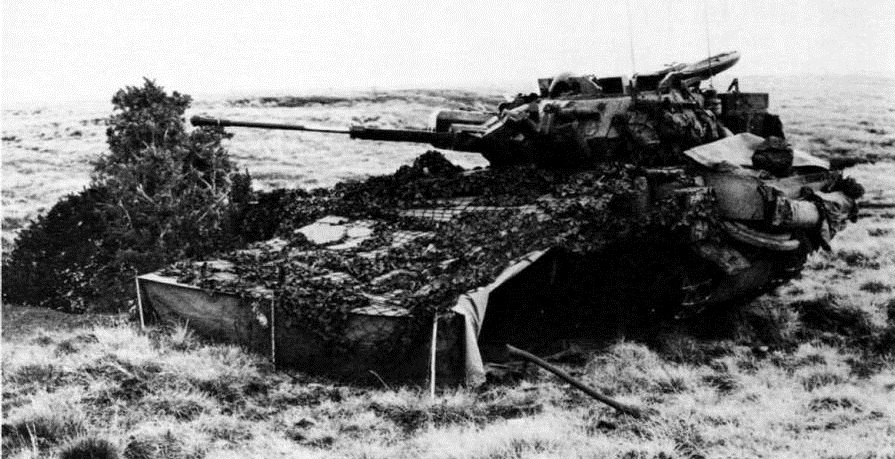
Even a platoon of armour here and there where least expected could do quite some damage - see the use of two troops of Scorpion tanks in the Falklands war at the long end of a logistical chain.
As a corollary to staff thought, the more pertinent question would perhaps be - is it worth taking the precautions and/or adding the infrastructure that will allow armour to enter?
It's inevitable that received wisdom be distilled down to simple precepts, but this is rather regrettable.
This memetic behaviour certainly has its reasons - armour excels in mobile firepower, independent movement and dominating large tracts of terrain, among other speed-related precepts, and operating in closed terrain or ones lacking roads can be a dangerous affair.
Moreover, logistics vehicles that must follow the armour are often not tracked.
However, this dismissal of areas like mountains, urban terrain, forests and such as poor 'tank country' runs at odds with historical counterexamples. One doesn't even need to get into obscure examples - the US Marines in Fallujah moved in with plenty of tank support, using the combination of armour and firepower of Abrams tanks to destroy strongpoints and buildings. The after-action report detailing the carefully prescribed dance of infantry and tanks covering one another is rather stunning, albeit somewhat incredible. The German attack through the Ardennes in 1940 took place in an area both mountainous and forested, and with a river crossing to boot.
Terrain is but a problem to be overcome via engineering or planning. For example, if one's engineers are adept at civil engineering, gravel could be laid to help one's wheeled lorries transport supplies forward.
Even a platoon of armour here and there where least expected could do quite some damage - see the use of two troops of Scorpion tanks in the Falklands war at the long end of a logistical chain.
As a corollary to staff thought, the more pertinent question would perhaps be - is it worth taking the precautions and/or adding the infrastructure that will allow armour to enter?
Tuesday, 4 November 2014
Wanted - A historical perspective on volunteering for war abroad
The fighter, drawn by ideology, righteousness and perhaps curiosity about violence, arranges transport to the epicenter of conflict. He or his group leader gets in touch with local fixers, who bring them further in from regional staging areas, crossing the border with the benefit of local knowledge.
By now, almost 15 years after the beginning of the war on terror, the dynamics of how volunteers and arms make their way from all over the world to armed paramilitary and terror groups ought to be well known. It can be quite a market - Mujahideen moved into Chechnya in the 1990s insurgency, and now Chechen fighters are making themselves felt abroad.
The Islamic State group has been the most recent target of this hand-wringing. The chief worry that is captivating media would be efforts to keep youth from travelling to the Middle East to join this group. This has been largely justified by a two-pronged approach: first, howling that returned militants may be a threat, and second a vague idea of weakening the IS by depriving them of warm bodies and the symbolic participation of international members.
Surprisingly, I've found quite little in mainstream media of historical comparisons between IS and other similar operations in the past. To Europeans, the most direct comparison of youth flooding to a nation to serve in conflict would likely be the International Brigades in the Spanish Civil War.
For example, the issue of "returning fighters" was also grappled with as they began to be disbanded under international mediation, and after some diehards left only as the war wound up. In particular, the UK was concerned of IRA-linked Irish fighters that might possibly contribute to the low-level conflict in Northern Ireland. Quite some returning fighters indeed remained involved in British socialist politics, some with personal plans for armed revolution. In the United States, veterans of the Abraham Lincoln Brigade, while allowed to return, were viewed as security risks.
Nearer to our time, leaving aside the obvious comparisons to other Islamic terror groups, some sort of comparison could be made with international terrorism and mercenary work of the 1980s. I am a bit pressed to think of any parallels in the past - perhaps the Crusades, or medical volunteering in the Victorian wars such as Crimea.
The greatest change from then seems to me to be modern communications technology that allows interested candidates to self-organize. (Whether the internet is any more effective than the underground socialist newspapers of old though is something worth considering.)
Certainly there will be constants. The arms are probably more important than the men - no matter how motivated, going abroad to a new locale to fight will require acclimatizing yourself to a new set of conditions. One common approach to solving this issue I would look out for would be an acclimatization period in rear areas of the front, or simply putting international fighters together in a composite unit much like IS has done.
A worthy sociological comparison could be made with the modern trend of "voluntourism", with first world youth heading to impoverished areas of Africa to volunteer. On the face of it these activities may seem to attract opposite ends of the socioeconomic spectrum, but there certainly are similarities - interest in seeing the world, poor information on the complexities of their destination (for some), the importance of a foreign face to the destination region...
By now, almost 15 years after the beginning of the war on terror, the dynamics of how volunteers and arms make their way from all over the world to armed paramilitary and terror groups ought to be well known. It can be quite a market - Mujahideen moved into Chechnya in the 1990s insurgency, and now Chechen fighters are making themselves felt abroad.
The Islamic State group has been the most recent target of this hand-wringing. The chief worry that is captivating media would be efforts to keep youth from travelling to the Middle East to join this group. This has been largely justified by a two-pronged approach: first, howling that returned militants may be a threat, and second a vague idea of weakening the IS by depriving them of warm bodies and the symbolic participation of international members.
Surprisingly, I've found quite little in mainstream media of historical comparisons between IS and other similar operations in the past. To Europeans, the most direct comparison of youth flooding to a nation to serve in conflict would likely be the International Brigades in the Spanish Civil War.
For example, the issue of "returning fighters" was also grappled with as they began to be disbanded under international mediation, and after some diehards left only as the war wound up. In particular, the UK was concerned of IRA-linked Irish fighters that might possibly contribute to the low-level conflict in Northern Ireland. Quite some returning fighters indeed remained involved in British socialist politics, some with personal plans for armed revolution. In the United States, veterans of the Abraham Lincoln Brigade, while allowed to return, were viewed as security risks.
Nearer to our time, leaving aside the obvious comparisons to other Islamic terror groups, some sort of comparison could be made with international terrorism and mercenary work of the 1980s. I am a bit pressed to think of any parallels in the past - perhaps the Crusades, or medical volunteering in the Victorian wars such as Crimea.
The greatest change from then seems to me to be modern communications technology that allows interested candidates to self-organize. (Whether the internet is any more effective than the underground socialist newspapers of old though is something worth considering.)
Certainly there will be constants. The arms are probably more important than the men - no matter how motivated, going abroad to a new locale to fight will require acclimatizing yourself to a new set of conditions. One common approach to solving this issue I would look out for would be an acclimatization period in rear areas of the front, or simply putting international fighters together in a composite unit much like IS has done.
A worthy sociological comparison could be made with the modern trend of "voluntourism", with first world youth heading to impoverished areas of Africa to volunteer. On the face of it these activities may seem to attract opposite ends of the socioeconomic spectrum, but there certainly are similarities - interest in seeing the world, poor information on the complexities of their destination (for some), the importance of a foreign face to the destination region...
Wednesday, 22 October 2014
Singapore's armoured vehicles, part 2 - Some stay the same
This a continuation of my previous post on changes your author has observed in the Singaporean armoured vehicle fleet and doctrine. This short piece will instead focus on some AFV-related priorities of the Army and also the Armour formation.
Firstly, a complete set of mechanized equipment from logistics to artillery carriers to tanks. It goes without saying that the very existence of an independent "Armour" formation that owns complete units, rather than being simply a training command for vehicle operators, speaks volumes of the highly conventional concept of operations - as a combined, fully mechanized armoured fist. A full array of equipment to this end will thus continually be required - motorized combat support (artillery, air defence), service support (logistics), and the actual combatants.

Primus self-propelled gun
Moreover, the SAF has always maintained something of an armour superiority over its neighbours. The historical existence of a heavy-for-the-region tank force is also an open secret. The "T" main battle tanks served the nation for many years but have apparently been retired with the introduction of the Leopard 2 MBTs. However, in a process first floated by Tim Huxley in his classic introduction to Singapore's military forces, military spending in Southeast Asian nations has increased and neighbours are capable of fielding more capable MBTs. In this light, a superiority may be sought through a variety of methods.
This is somewhat speculative - but one thing that has supposedly remained constant is the need for a light tank (fighting vehicle?). I wouldn't have been aware of this if not for a low-level online murmurings of "MLC 30" vehicles for the SAF, MLC referring presumably to "military load classification" and 30 being 30 tons. Certainly there has been a niche for lightweight and small armour for the SAF. This is not really for the conventional purpose of airmobility, but for being small and light enough to navigate between trees of plantations and use unimproved bridges at speed. With the retirement of the SM1 (AMX-13) light tanks there has been a gap in this capability, and perhaps there might be a revival of this at some point.
Monday, 8 September 2014
The cult of the "operators"
Military topics of public interest come and go. The Anglo-German dreadnaught race saw a public mania for naval armaments, summed up by the slogan "we want eight and we won't wait", and newspapers publishing Royal Navy gunnery results on the front pages.
The latest fad certainly seems to be that of the "operator" - the clandestine commando secret O-G-A soldier who works in the deeper than black field. This glamour also applies to mercenaries and security contractors, to an extent.
To be fair, human interest and a hero cult has always captivated people - it certainly beats reading about the life and times of a cruise missile. The United States has always had a bit of an individualistic cult of pilots, perhaps due to savvy marketing and even Top Gun. In contrast, tankmen working together as a band of brothers seem to have been more popular in the USSR and other eastern bloc nations, a fact that somewhat persists today with Russian youth's great love of World of Tanks(!)
It's moreover a fruit of the shadowy, grinding wars worldwide - when did a carrier last fly off an alpha strike? In fact it could be said that the role of the infantry in doing tasks that require a decidedly human touch - the vast amount of things that fall under "counterinsurgency" - has never been more prominent.
A ring-fenced body of troops also offers plausible deniability for special activities and experimentation.
Nevertheless, I am of the opinion that one needs to be wary of the cult of the operator just like any other.
Firstly, the influence of the operators and their mindsets is certainly useful but cannot be elevated needlessly. Here we run into the age-old problem of endorsement and public relations. The "politicized SEAL" is a new element in American politics, for example. Just to name some recent incidents, much has been made of the Osama operation and the Operation Red Wings debacle, plus corresponding movies.
In a more military, bureaucratic sense, as the SF cadre gets into positions of military leadership they become another entrenched interest who may wish to protect their special prerogative like any other. It's not that commandoes won't be able to command, say, an artillery brigade or vice versa. It's a management theory question - while another set of expertise is welcomed, empire-building can ensue despite the best of intentions.
Leadership should additionally be careful of the mindset that certain missions such as long-range recce is the sole domain of special units. In theory, certain skills identified with "special forces" could and should be distributed more widely among the wider body of conventional troops. The average infantry unit could do a lot more - not all US trainers are special forces. These would include training of local units, for instance, simple hostage rescue and aggressive patrolling and close observation in the face of the enemy. In a wider war, a small cadre of specialists will be very quickly run through, and perhaps a greater dispersion of skill will be of more utility.
The latest fad certainly seems to be that of the "operator" - the clandestine commando secret O-G-A soldier who works in the deeper than black field. This glamour also applies to mercenaries and security contractors, to an extent.
To be fair, human interest and a hero cult has always captivated people - it certainly beats reading about the life and times of a cruise missile. The United States has always had a bit of an individualistic cult of pilots, perhaps due to savvy marketing and even Top Gun. In contrast, tankmen working together as a band of brothers seem to have been more popular in the USSR and other eastern bloc nations, a fact that somewhat persists today with Russian youth's great love of World of Tanks(!)
It's moreover a fruit of the shadowy, grinding wars worldwide - when did a carrier last fly off an alpha strike? In fact it could be said that the role of the infantry in doing tasks that require a decidedly human touch - the vast amount of things that fall under "counterinsurgency" - has never been more prominent.
A ring-fenced body of troops also offers plausible deniability for special activities and experimentation.
Nevertheless, I am of the opinion that one needs to be wary of the cult of the operator just like any other.
In a more military, bureaucratic sense, as the SF cadre gets into positions of military leadership they become another entrenched interest who may wish to protect their special prerogative like any other. It's not that commandoes won't be able to command, say, an artillery brigade or vice versa. It's a management theory question - while another set of expertise is welcomed, empire-building can ensue despite the best of intentions.
Leadership should additionally be careful of the mindset that certain missions such as long-range recce is the sole domain of special units. In theory, certain skills identified with "special forces" could and should be distributed more widely among the wider body of conventional troops. The average infantry unit could do a lot more - not all US trainers are special forces. These would include training of local units, for instance, simple hostage rescue and aggressive patrolling and close observation in the face of the enemy. In a wider war, a small cadre of specialists will be very quickly run through, and perhaps a greater dispersion of skill will be of more utility.
An amusing side effect on the overfocus on the prestige of SF is a mushrooming number of all whom are termed "special" - the term can be quite meaningless, and one would do well to exercise caution. I do agree that by all means dole it out, like the Israel "paratrooper" (a nominal honour to encourage reservist units) and Soviet "Guards" units, but chroniclers and external readers should be wary!
(excellent post on this subject: http://defencewithac.blogspot.co.uk/2013/07/the-devils-advocate-special-forces.html)
(excellent post on this subject: http://defencewithac.blogspot.co.uk/2013/07/the-devils-advocate-special-forces.html)
Subscribe to:
Posts (Atom)